
Blog
Three Nitrogens and an Oxygen: What Holds the Copper Inside GHK-Cu

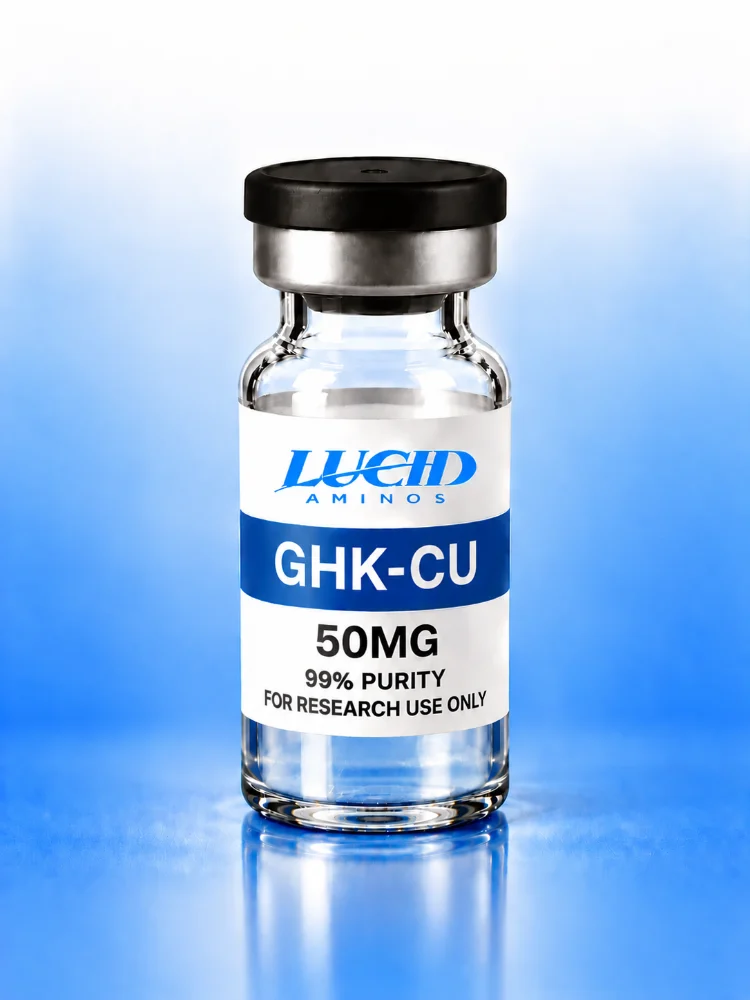
Three amino acids. That is all GHK is: glycine, histidine, lysine. So how does something so small hold a metal ion so firmly? Keep reading, because the answer is a tidy piece of coordination chemistry.
Copper wants partners
A copper(II) ion is positively charged and hungry for electron pairs. Molecules that can donate those pairs are called ligands, and the more points a ligand grabs with, the tighter the hold.
GHK is a four-point grip
In the literature, GHK-Cu is described as binding copper through the free amine at the glycine end, a deprotonated backbone nitrogen, the imidazole ring of histidine, and an oxygen from the C-terminal carboxylate. That is three nitrogens and one oxygen wrapped around a single ion. The exact geometry shifts with pH, which is one reason handling conditions matter.
Why the solution is blue
Copper(II) bound this way absorbs light in the orange-red part of the spectrum, so what you see is blue. It is a built-in visual check that copper is still present, and fading color is a prompt to look closer.
The twist
Histidine is the star. Its imidazole ring is one of the best metal grabbers among the twenty amino acids. Take it out and the whole complex falls apart. The humble middle residue is doing the heavy lifting.
See the research listing for GHK-Cu and compare it with the topical form, Topical GHK-Cu.
Explore Lucid Aminos
- Shop all research compounds
- Read the lab reports (COA)
- Frequently asked questions
- Partner program
- About Lucid Aminos
- Contact us
For laboratory research use only. Not for human or veterinary use, and not intended to diagnose, treat, cure or prevent any condition. This article is educational and is not medical advice.