
Blog
Cystic Acne and Peptides: What Researchers Know About Deep Inflammation

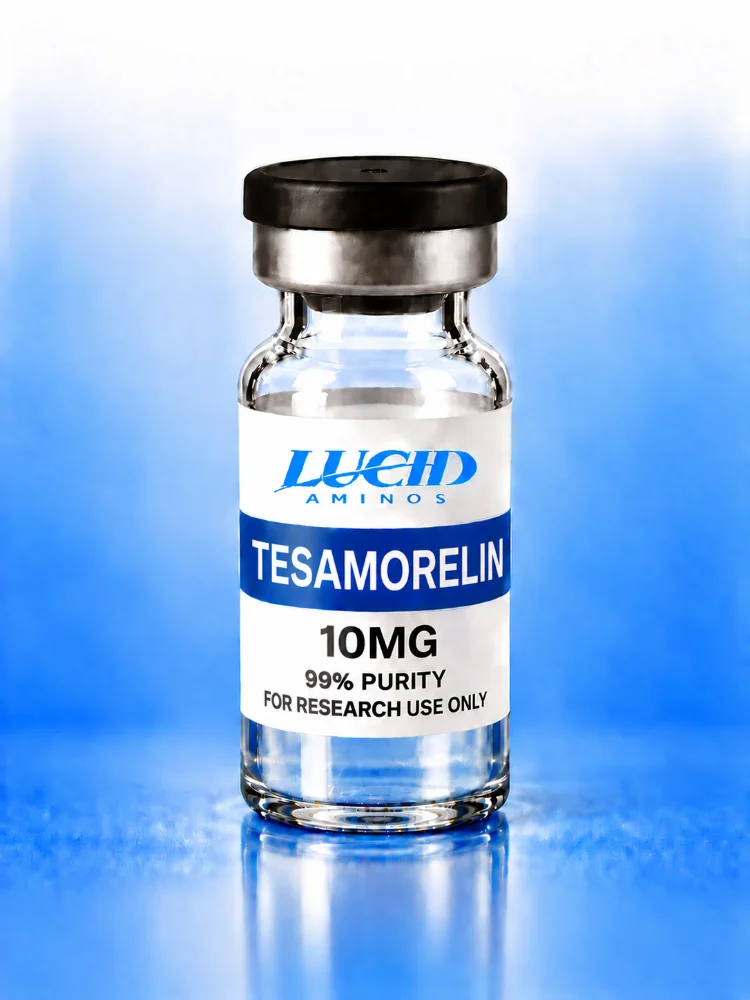
Most people searching for cystic acne peptides are really asking one question: why do some breakouts sit deep under the skin for weeks while others come and go in days? This guide explains the biology of deep, inflamed acne lesions and shows where peptide researchers focus their laboratory work. It is educational content about research, not medical advice.

What makes cystic acne different from surface acne
A typical whitehead or blackhead forms when a pore clogs with oil (sebum) and dead skin cells. Cystic lesions go further. The follicle wall weakens and can rupture below the surface, spilling oil, keratin and bacteria into the surrounding tissue. The immune system treats this material as a foreign body and mounts a strong inflammatory response. That is why these lesions are large, tender and slow to resolve.
The inflammatory chain researchers study
In laboratory models, deep acne lesions involve a predictable sequence of events:
- Follicle rupture releases sebum components and Cutibacterium acnes into the dermis.
- Immune cells arrive, including neutrophils and macrophages, which release signaling molecules called cytokines such as IL-1 beta, IL-6 and TNF-alpha.
- The NF-kB pathway amplifies the response inside cells. For a deeper look, see our article on inflammation and acne.
- Tissue damage and remodeling follow, which is why deep lesions are the ones most linked to scarring.
Where peptides enter the research conversation
Peptides are short chains of amino acids that act as signals between cells. Three are discussed most often in skin and inflammation research.
KPV
KPV is a three amino acid fragment (lysine, proline, valine) taken from the tail of alpha-MSH. In cell and animal studies it has been examined for effects on inflammatory signaling, including the NF-kB pathway. Much of that work comes from gut inflammation models, so researchers are cautious about applying it directly to skin. Read the full KPV guide.
BPC-157
BPC-157 is a 15 amino acid peptide derived from a protein found in gastric juice. Rodent studies have examined it in tendon, muscle, gut and skin wound models, usually looking at tissue repair and blood vessel formation. Human data are very limited. See the BPC-157 guide for the detail.
GHK-Cu
GHK-Cu is a copper-binding tripeptide first isolated from human plasma. In cell culture it has been studied for effects on collagen production, extracellular matrix remodeling and the activity of genes involved in repair. This is the peptide most often connected to the aftermath of deep acne, meaning scar remodeling. Our GHK-Cu skin research guide covers the evidence.
What the research does and does not show
It is important to be honest about the limits. There are no large human trials showing that any research peptide treats cystic acne. Most findings come from cell cultures and animal models, which cannot be assumed to translate to people. The evidence pyramid explains why each level of evidence carries different weight. Established clinical approaches for cystic acne are managed by dermatologists, and anyone dealing with painful, deep lesions should speak to a qualified clinician.
Why deep lesions scar
The deeper and longer an inflammatory event lasts, the more collagen the skin must rebuild, and the more room there is for an imperfect result. That is the link between cystic acne and the scar types covered in our guide to acne scars and collagen biology. It also explains why researchers are interested in anti-inflammatory signals and in repair signals at the same time.
How a cystic lesion is modeled in the lab
Researchers cannot recreate a full cystic lesion in a dish, so they use building blocks. Cultured sebocytes (oil gland cells) show how lipid production responds to signals. Keratinocytes show how the follicle lining behaves. Immune cells such as macrophages can be exposed to C. acnes components to measure cytokine release. Animal models, often using injected bacteria or irritants, give a closer look at tissue-level swelling. Each model answers a narrow question, which is why a single finding should never be stretched into a claim about treating acne.
Why consistent materials matter
When the goal is to compare a peptide against a control, the compound has to be pure and correctly stored, or the results mean little. That is why researchers check the batch report and follow proper handling steps, such as those in our handling guide.
Key takeaways
- Cystic lesions involve follicle rupture and a strong immune response, not just clogged pores.
- KPV, BPC-157 and GHK-Cu are studied for inflammation and tissue repair, mostly in cells and animals.
- Evidence in humans for acne specifically is limited.
- Good research needs verified purity, so always check the batch report on the COA page.
Frequently asked questions
Do peptides cure cystic acne?
No. There is no clinical evidence that they do. They are research compounds studied in laboratory settings.
Why is cystic acne so slow to heal?
Because the inflammation occurs deep in the dermis, where repair takes weeks. See our article on skin turnover.
Where can I read the primary studies?
Search the scientific literature directly on PubMed.
Browse the research compounds
Researchers following this topic often work with KPV, GHK-Cu, BPC-157. Every batch has its own report on the COA page, and you can browse the full shop for all research compounds.
Related reading
- Inflammation and Acne: NF-kB and Cytokines
- Types of Acne Scars and Collagen Biology
- The Evidence Pyramid for Peptide Acne Research
- KPV Peptide Complete Guide
Educational content only. All compounds sold by Lucid Aminos are for laboratory research use only and are not for human consumption. This article is not medical advice. If you have acne, speak with a qualified clinician.
Explore Lucid Aminos
- Shop all research compounds
- Read the lab reports (COA)
- Frequently asked questions
- Partner program
- About Lucid Aminos
- Contact us
For laboratory research use only. Not for human or veterinary use, and not intended to diagnose, treat, cure or prevent any condition. This article is educational and is not medical advice.