
Blog
Decoding Peptide Names: INN Stems, Research Codes and What the Numbers Mean

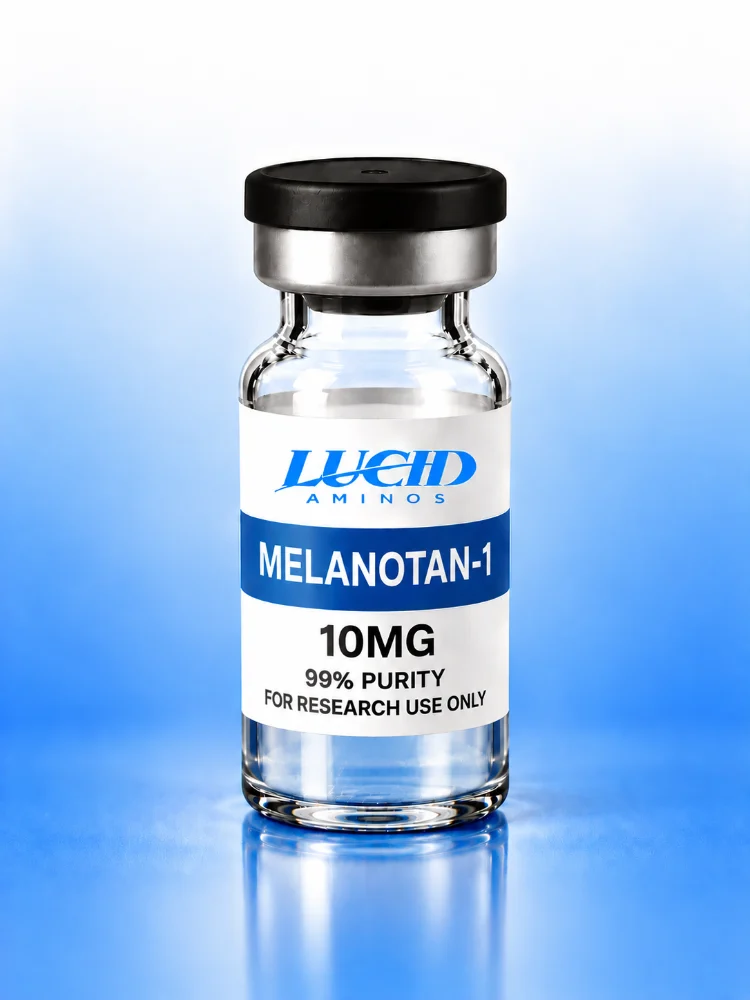
Peptide names are a maze: tesamorelin, CJC-1295, BPC-157, TB-500, afamelanotide, Melanotan-1. Some sound like chemistry, others like model numbers. There is a system underneath, and once you see it, a name starts to tell you something.

Key takeaways
- INN names are official generic names assigned by the World Health Organization.
- The ending, called a stem, signals the drug class.
- Research codes such as BPC-157 or CJC-1295 are informal labels from labs or companies.
- The same molecule can have an INN, a code and several brand names.
INN stems
The International Nonproprietary Name system gives each pharmaceutical substance a unique generic name. Names are built from a prefix chosen freely and a stem that signals the family. Some common stems for peptides:
- -relin: hormone-releasing factor analogs, such as tesamorelin and sermorelin, which are GHRH analogs.
- -morelin: growth-hormone secretagogues acting at the ghrelin receptor, such as ipamorelin.
- -glutide: GLP-1 receptor agonists, such as semaglutide and liraglutide.
- -tocin: oxytocin analogs.
- -pressin: vasopressin analogs.
- -relix and -relin variants: GnRH antagonists and agonists.
- -tide: a broad ending for peptides and related compounds in many names.
Reading the stem tells you the target class before you read anything else. A compound ending in -relin acts through a releasing-hormone receptor. See the comparison in our post on CJC-1295 versus tesamorelin.
Research codes
Many compounds popular in research circles have no INN. They carry the code a lab or company assigned:
- BPC-157. BPC stands for Body Protection Compound, and the number is a laboratory designation. It refers to a defined short peptide fragment.
- CJC-1295. A company code for a modified GHRH analog. Versions with and without DAC (drug affinity complex) are different molecules.
- TB-500. A name used for a synthetic fragment related to thymosin beta-4.
- Melanotan-1 and -2. Names from the University of Arizona work on melanotropic peptides in the 1980s. The INN for melanotan-1 is afamelanotide.
Because codes are informal, two sellers can use one code for slightly different molecules. This is another reason a certificate of analysis should state the confirmed identity and, ideally, the sequence or molecular weight.
Brand names and generics
A branded medicine is the same INN sold under a trade name. A research compound is typically sold under its INN or its code, not a brand. When searching, using the INN returns the most reliable literature.
Using names to search literature
- Search both the INN and any code, plus the full chemical name.
- Search the receptor family as well; see our melanocortin receptor map for how related analogs differ.
- Read the methods section to see which exact compound was used.
The bottom line
A name is a clue, not a guarantee. Stems tell you the class, codes tell you who named it, and the batch report tells you what is actually in the vial. For the longer story of where these classes came from, see the history of peptide drugs.
Related reading
- CJC-1295 vs. Tesamorelin: Comparing Two GHRH Analogs in Research Literature
- Melanocortin Receptors MC1R to MC5R: A Map for Reading Melanotan Research
- A Short History of Peptide Drugs: From Insulin to GLP-1
- Browse the full Research Library
For laboratory research use only. Not for human or veterinary use, and not intended to diagnose, treat, cure or prevent any condition. This article is educational and is not medical advice.