
Blog
A Buyer’s Checklist for Verifying a Certificate of Analysis

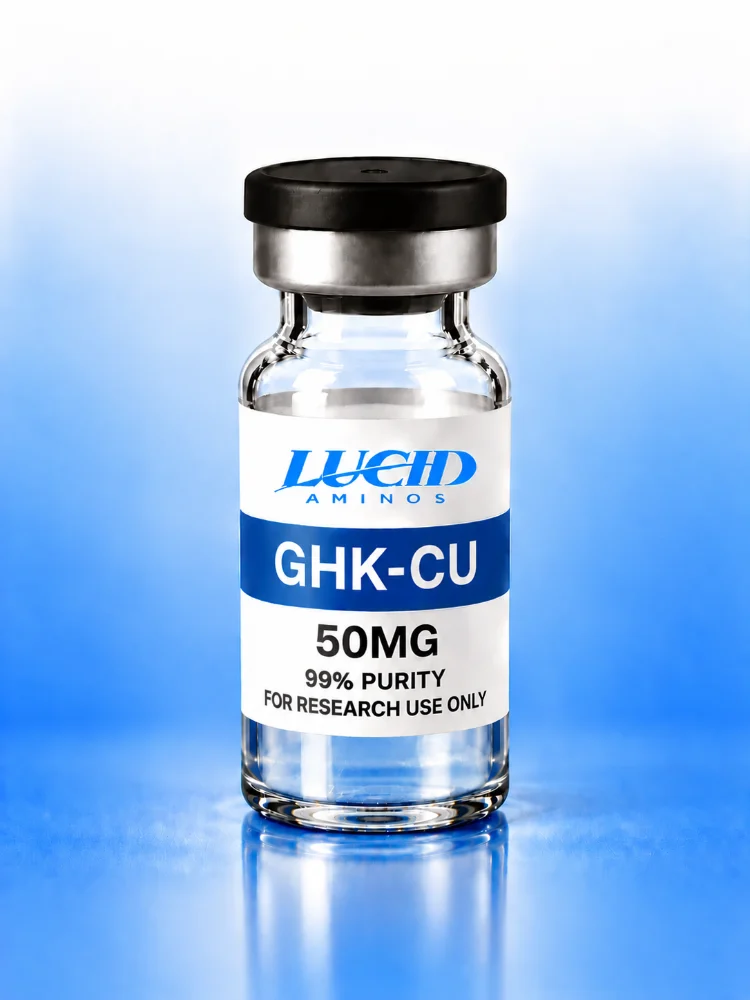
A certificate of analysis is only as valuable as its connection to the vial in your hand. Whatever supplier you buy from, a few quick checks can tell you whether a report is specific and checkable or generic and unverifiable. This is the checklist researchers use.

Key takeaways
- The lot number on the report must match the lot on the vial.
- Look for lab identity, dates, method details and an analyst or reviewer.
- Chromatograms should be labeled and plausible, and different products should not share the same trace.
- You should be able to confirm the report with the lab.
The identity block
- Product name and exact form, including salt, amidation and any modification.
- Lot or batch number that matches your vial exactly.
- Sample receipt and test dates, which should be before your purchase and not years old.
- Report or sample number assigned by the lab.
The lab block
- Name, address and contact for the testing lab.
- Accreditation statement with certificate number and a scope that covers the test (see ISO 17025 explained).
- Name or signature of the analyst and a reviewer.
The method block
- Technique used (HPLC, LC-MS) and detection wavelength.
- Column, mobile phases and gradient or a reference to a method.
- Reported results with units and, for quantities, uncertainty or limits.
- Identity by mass spectrometry with observed and theoretical mass (see reading a mass spectrum).
The data block
- A real chromatogram with labeled axes, retention times and integrated peaks (see how to read a chromatogram).
- A noise level and baseline that look natural.
- Peak areas that add up to the stated purity.
- A mass spectrum showing the expected mass and not just a table.
Consistency checks
- Do different products carry identical-looking chromatograms? Traces should differ with the compound.
- Do all lots show exactly the same purity to the decimal? Real batches vary.
- Does the stated molecular weight match the compound and salt form?
- Are numbers rounded suspiciously, such as a purity of exactly 100 percent?
- Does the report mention tests that would need equipment the lab does not have?
Direct verification
The strongest check is to contact the lab with the report number and ask them to confirm that it exists and matches. Many labs provide online lookup or a QR code that opens the report. If a supplier cannot tell you which lab produced a report, that is informative in itself.
Beyond the document
A COA is one layer. Useful additional evidence includes your own testing of a sample, comparison of lots (see lot-to-lot variability), and stability data. For the basics of the layout, begin with how to read a peptide COA.
The bottom line
A good COA invites checking. If a report is specific, consistent and verifiable, you can rely on it much more than on a nicely formatted PDF with nothing behind it.
Related reading
- How to Read a Certificate of Analysis (COA) for Research Peptides
- ISO 17025 Accreditation: What It Means When a Lab Tests Your Peptide
- How to Read an HPLC Chromatogram: Peaks, Shoulders and Baselines
- Browse the full Research Library
Explore Lucid Aminos
- Shop all research compounds
- Read the lab reports (COA)
- Monthly Research Panel
- Frequently asked questions
- Partner program
- About Lucid Aminos
- Contact us
For laboratory research use only. Not for human or veterinary use, and not intended to diagnose, treat, cure or prevent any condition. This article is educational and is not medical advice.