
Blog
Tesamorelin vs CJC-1295: Why Comparing Two GHRH Analogs Head to Head Is Harder Than It Looks

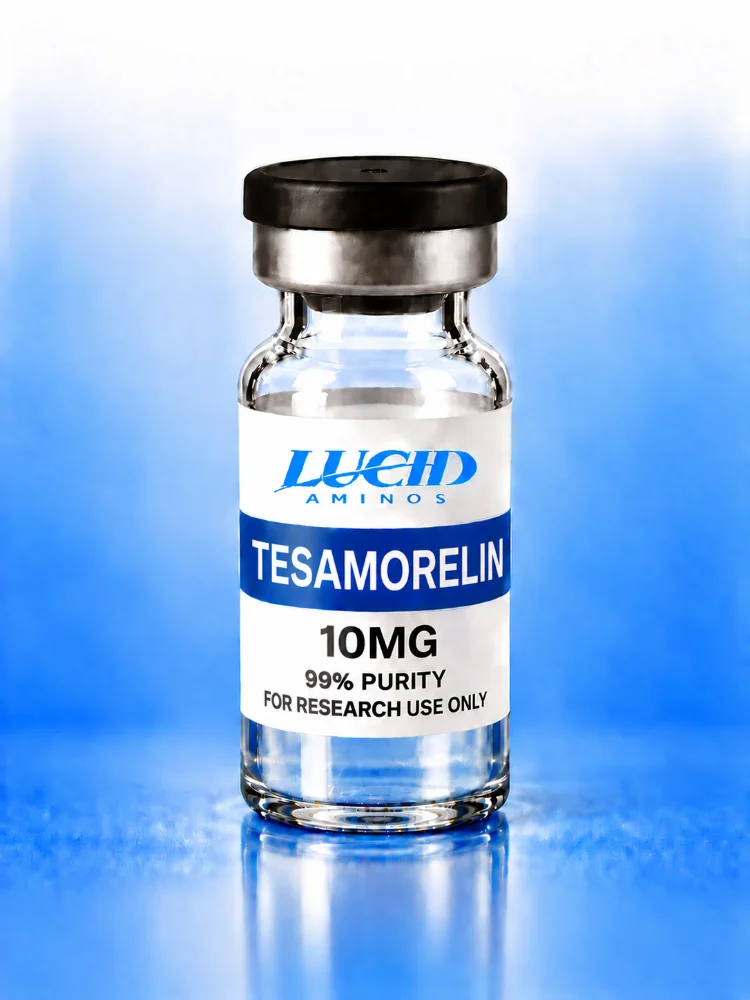
Forum threads love a winner. But a fair comparison of tesamorelin and CJC-1295 begins with admitting that they were designed to solve the same problem in different ways.

Key takeaways
- Both are analogs of growth hormone releasing hormone.
- Tesamorelin keeps the full 44-residue sequence and adds an N-terminal hexenoyl group.
- CJC-1295 is built from a shorter fragment with amino acid substitutions for stability.
- Differences in length, modification and study design make direct claims shaky.
- Each should be compared using its own lab data and published research.
Two design strategies
Tesamorelin protects the start of the molecule with a small chemical group, as in our hexenoyl post. CJC-1295 shortens the sequence and changes selected residues, a different route to the same goal, as in half-life engineering.
What a fair comparison needs
- Same model system and same conditions.
- Same measured outcome and timing.
- Documented identity and purity of each material.
- Enough repeats to separate signal from noise.
Why forum comparisons mislead
Different studies use different models and endpoints, so numbers do not line up. Without matched conditions, comparing them is like comparing a car and a bicycle by top speed on different roads.
Context
See the tesamorelin overview, CJC-1295 and ipamorelin and the feedback story in GH feedback loops. Lot data lives on our lab reports page.
Related reading
Explore Lucid Aminos
- Shop all research compounds
- Read the lab reports (COA)
- Monthly Research Panel
- Frequently asked questions
- Partner program
- About Lucid Aminos
- Contact us
For laboratory research use only. Not for human or veterinary use, and not intended to diagnose, treat, cure or prevent any condition. This article is educational and is not medical advice.