
Blog
BPC-157 and TB-500 Attend Couples Therapy, Argue Over Who Gets Top Billing in the Blend

Satire. Everything below is a joke about peptide culture. All characters are fictional and nothing here is advice.
“We share a vial and a label,” said BPC-157, 15 residues long and, by its own account, “the one people actually remember.” TB-500 sighed. “Fifteen residues. Some of us have a whole identity crisis about what we even are.”

Key takeaways
- The joke: two peptides, one vial, zero boundaries.
- The point: a blend report must identify each component separately.
- The name TB-500 is ambiguous, so sequence and mass matter.
Session one
The therapist, a calm HPLC column, asked each to describe the relationship. “He elutes earlier and thinks that makes him first,” said TB-500. BPC-157 replied that he “just has a smaller retention window.” Neither backed down.
The real issue
“You’re a heptapeptide fragment or a whole 43-residue protein depending on who’s labeling the vial,” BPC-157 said. TB-500 stared at the floor. “That’s not fair.” It was, however, accurate.
The serious point
- Each peptide in a blend needs its own mass and its own peak, as in our blend checklist.
- BPC-157 is GEPPPGKPADDAGLV, mass about 1419.5, as in its sequence guide.
- TB-500 is used for more than one thing, as in the TB-500 post.
- Combos are convenience, not evidence of interaction, as in the stacking post.
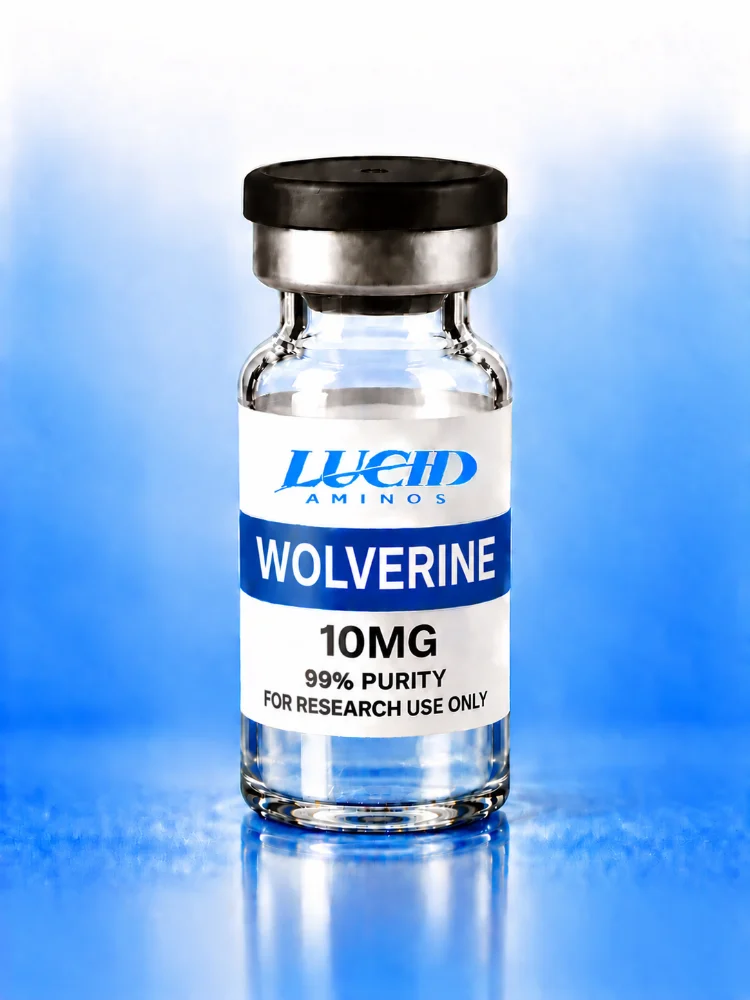
See the product page for Wolverine (BPC-157 5mg + TB-500 5mg) and its lab report, or browse the full shop.
Related reading
Explore Lucid Aminos
- Shop all research compounds
- Read the lab reports (COA)
- Frequently asked questions
- Partner program
- About Lucid Aminos
- Contact us
For laboratory research use only. Not for human or veterinary use, and not intended to diagnose, treat, cure or prevent any condition. This article is educational and is not medical advice.