
Blog
How to Read a Two-Peptide Blend Report: A Checklist Using the BPC-157 and TB-500 Wolverine Blend

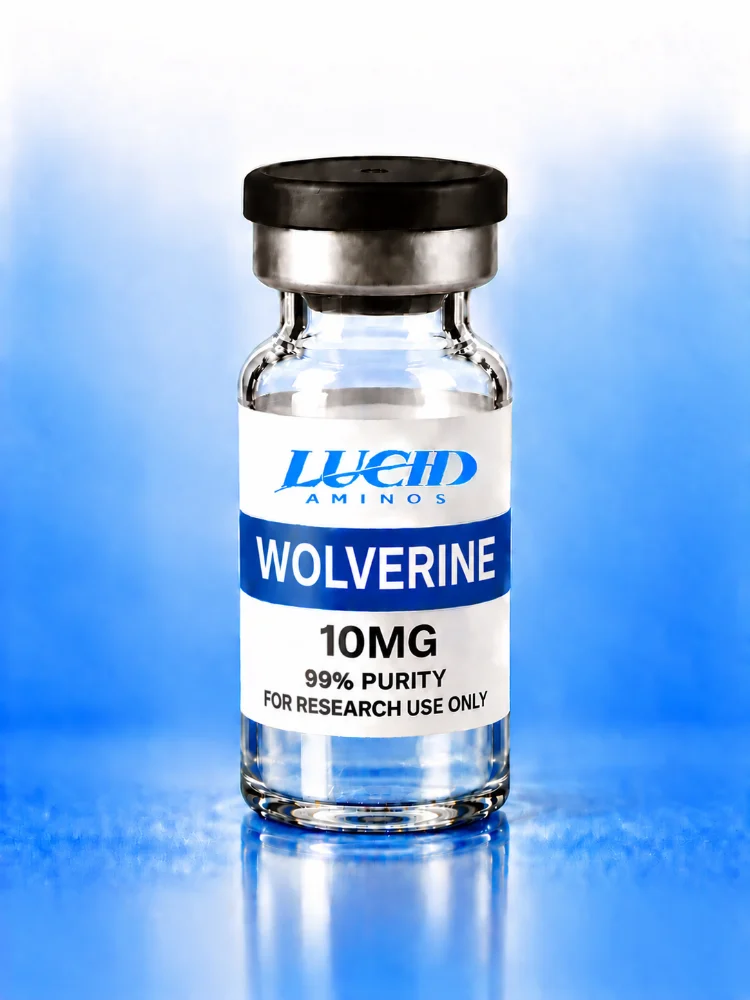
A blend report is harder to read than a single-peptide report. There are two molecules, two sets of numbers, and a question that does not exist for a single peptide: is each one actually present in the right amount?

Key takeaways
- A blend report must identify each peptide separately, not just the mixture.
- Expect two main HPLC peaks, one per component, not a single peak.
- Each peak needs its own mass confirmation.
- The labeled amounts, for example 5 mg of each, need support from calibrated quantification.
- Reporting a single combined purity number can hide a problem with one component.
Step one: two peaks
On a reversed-phase trace, BPC-157 and TB-500 will not elute together because they differ in size and composition. A well-made report shows two clear peaks, each labeled. If you see only one big peak, ask whether the other peptide is missing or merged. Background in our retention time post.
Step two: mass for each
Confirm the BPC-157 mass at about 1419.5, as covered in our BPC-157 sequence guide. For the second component, check the mass against the form named on the label; see what TB-500 means. Two peaks with two matching masses are far stronger evidence than one.
Step three: how much of each
- Area percentages from UV show how pure each peak is, not how much is in the vial.
- Amount per component needs calibration against standards, as in our calibration curve post.
- Net peptide content differs between peptides, so equal powder weights do not mean equal peptide, as in our salt forms post.
- Ask whether the ratio of the two was measured or only assumed.
Step four: batch and sample
- The lot number on the report should match the vial, as in our report authenticity guide.
- Ask about batch-to-batch consistency, as in our batch variability post.
- Check the test date and the method listed.
Bottom line
A blend report that answers the four steps above is a good report. One that gives a single purity number does not tell you enough. See our lab reports page and the blend research overview.
Related reading
Explore Lucid Aminos
- Shop all research compounds
- Read the lab reports (COA)
- Monthly Research Panel
- Frequently asked questions
- Partner program
- About Lucid Aminos
- Contact us
For laboratory research use only. Not for human or veterinary use, and not intended to diagnose, treat, cure or prevent any condition. This article is educational and is not medical advice.