
Blog
Acid for Basic Peptides, Base for Acidic Ones: A Solubility Rule of Thumb

Not every peptide dissolves in plain water. A simple rule from peptide chemistry helps: first work out whether your peptide is basic, acidic or neutral overall.
Count the charges
Lysine (K) and arginine (R) are positive, as is the N-terminus. Aspartic acid (D) and glutamic acid (E) are negative, as is a free C-terminus. Add them up.
The rule
| Net charge | Type | First thing to try |
|---|---|---|
| Positive | Basic | Water, then a drop of dilute acetic acid |
| Negative | Acidic | Water, then a drop of dilute ammonium bicarbonate or base |
| Near zero | Neutral | A small amount of organic co-solvent such as DMSO |
Why it works
A peptide is least soluble at its isoelectric point, where its net charge is zero. Moving the pH away from that point puts a charge on the molecule, and charged molecules repel each other and dissolve.
An example
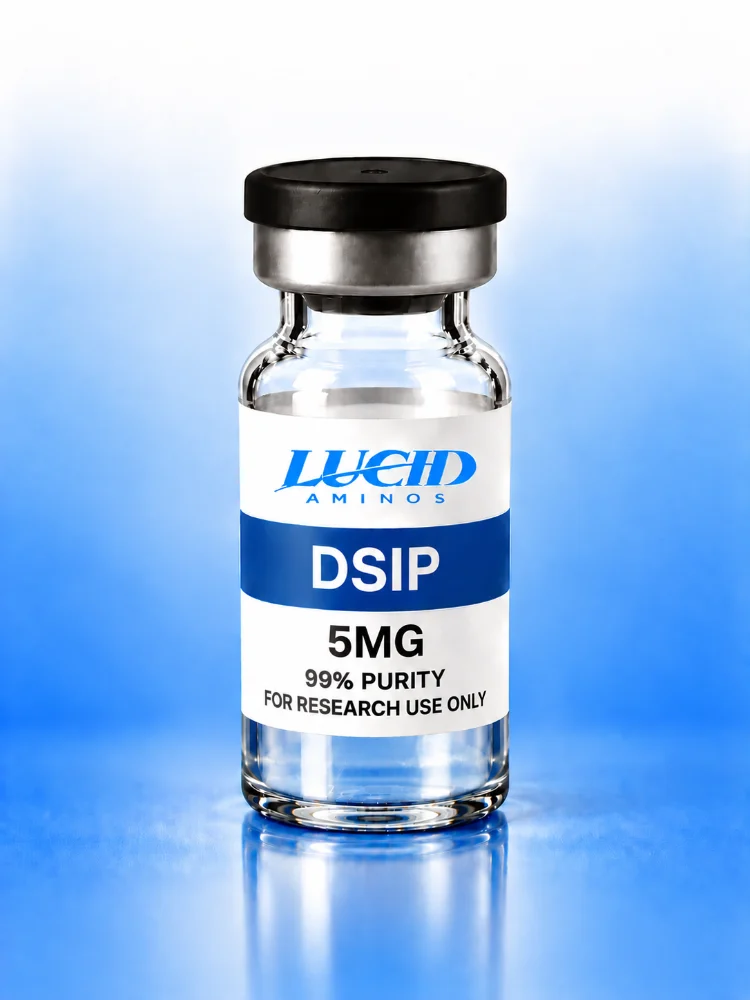
DSIP 5mg is a nine-residue peptide with two acidic residues and a free C-terminus, which makes it acidic overall. That is why careful pH choice matters when preparing research solutions.
Always try a small test portion first, and record every change. Keep reading for the next step.
Explore Lucid Aminos
- Shop all research compounds
- Read the lab reports (COA)
- Frequently asked questions
- Partner program
- About Lucid Aminos
- Contact us
For laboratory research use only. Not for human or veterinary use, and not intended to diagnose, treat, cure or prevent any condition. This article is educational and is not medical advice.