
Blog
Fmoc Chemistry Explained: How a Synthetic Peptide Grows One Residue at a Time

Building a peptide is like building a train, one carriage at a time. The trick is making sure each new carriage attaches only at the correct end. That is the job of a protecting group, and in modern synthesis the most common one is Fmoc.
What Fmoc is
Fmoc stands for fluorenylmethyloxycarbonyl. It caps the amine of each incoming amino acid so that it cannot react with itself. Louis Carpino introduced it in 1970.
The cycle
- Start: the first amino acid is anchored to a solid resin bead.
- Uncap: a base, usually piperidine, removes the Fmoc from the chain end.
- Wash: excess reagents are rinsed away.
- Couple: the next Fmoc-protected amino acid is activated and attached.
- Wash and repeat.
Direction matters
The chain is built from the C-terminus to the N-terminus, the opposite of how cells make proteins.
Side chains stay capped
Reactive side chains carry their own protecting groups, which survive the piperidine steps and are removed at the very end with acid.
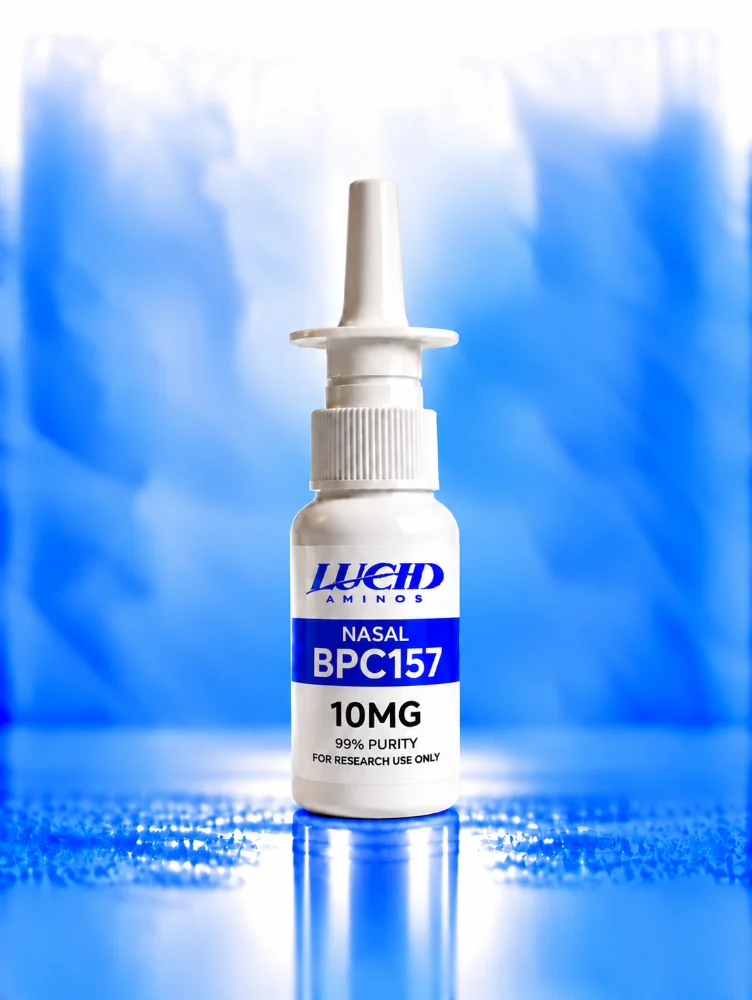
A 15-residue peptide such as Nasal BPC-157 10mg takes 15 cycles. Keep reading for the finishing step.
Explore Lucid Aminos
- Shop all research compounds
- Read the lab reports (COA)
- Frequently asked questions
- Partner program
- About Lucid Aminos
- Contact us
For laboratory research use only. Not for human or veterinary use, and not intended to diagnose, treat, cure or prevent any condition. This article is educational and is not medical advice.