
Blog
Copper(I) or Copper(II)? Why Reducing Agents and Chelators Matter for GHK-Cu

This article describes published laboratory science for educational purposes. It makes no claims about use in people.
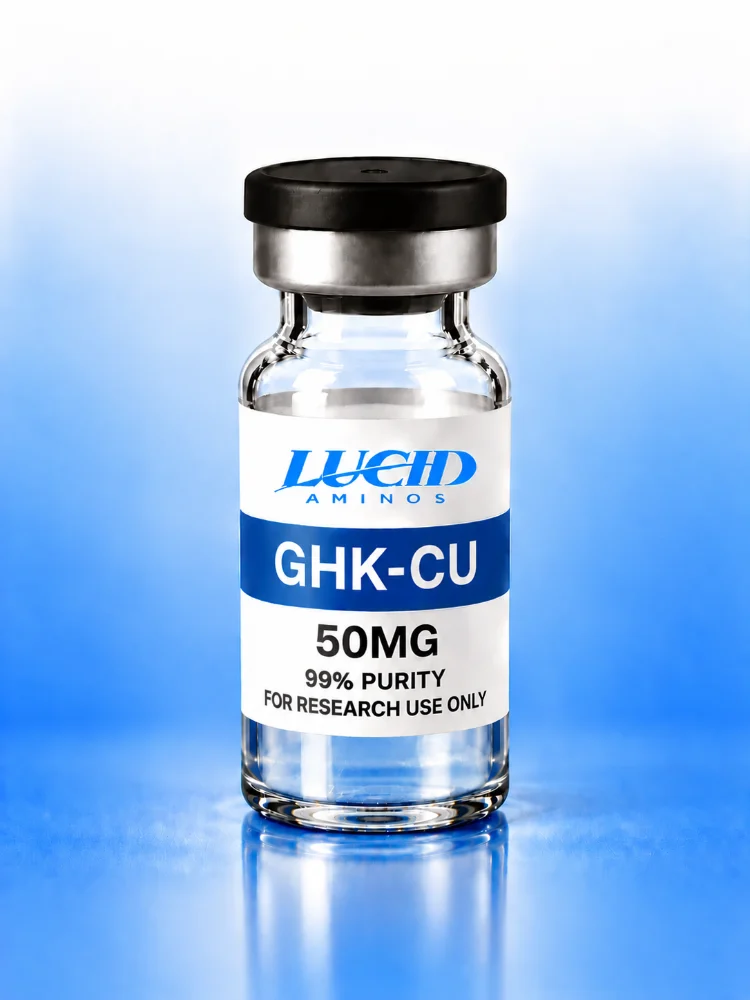
Copper can exist as copper(I) or copper(II). GHK-Cu is made with copper(II), the blue form. Several common lab ingredients can interfere with that balance.
Reducing agents
Reagents such as dithiothreitol (DTT), ascorbic acid and some other antioxidants can reduce copper(II) to copper(I). This changes the color and the way the peptide holds the metal. If your protocol calls for a reducing agent, test it alongside a control.
Chelators
EDTA and similar chelators grab copper with a very strong grip and can strip it from the peptide. Check the labels of any buffer or additive.
Other things to watch
- Strongly acidic or alkaline pH can displace the metal.
- Phosphate buffers can sometimes precipitate copper at higher concentrations.
- Direct bright light over long periods should be avoided.
A quick check
If a once-blue solution fades or turns cloudy, something has changed. Record it, and compare against a fresh sample. Keep reading for the topical side of the story.
Explore Lucid Aminos
- Shop all research compounds
- Read the lab reports (COA)
- Frequently asked questions
- Partner program
- About Lucid Aminos
- Contact us
For laboratory research use only. Not for human or veterinary use, and not intended to diagnose, treat, cure or prevent any condition. This article is educational and is not medical advice.