
Blog
Where NAD+ Goes: CD38, Sirtuins, PARPs and the Salvage Pathway

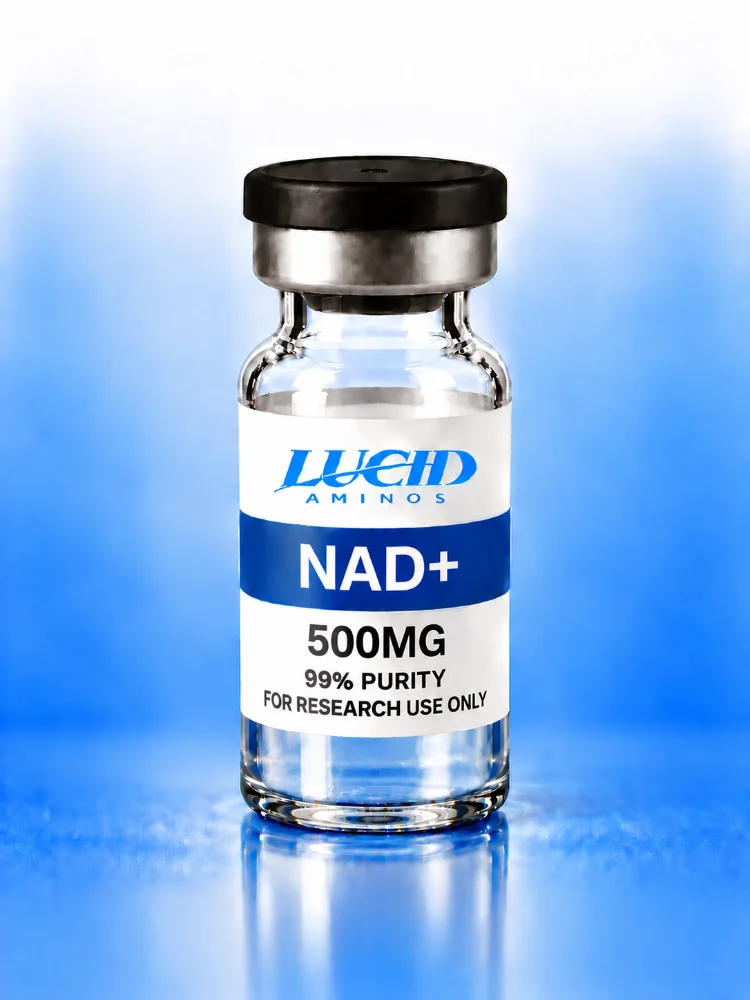
Most discussions of NAD+ focus on making more of it. The cell, however, runs a budget with income and spending. Several enzymes constantly break NAD+ down, and understanding them explains why NAD+ levels change with age, stress and disease in the research literature.

Key takeaways
- NAD+ is made by the salvage pathway (via NAMPT and NMN), the de novo pathway and the Preiss-Handler pathway.
- Sirtuins, PARPs and CD38 consume NAD+ as a substrate rather than only as an electron carrier.
- CD38 is a major NAD+ degrading enzyme whose levels rise in some aged tissues in animal studies.
- Compartments matter: nucleus, cytosol and mitochondria have separate pools.
Two jobs for one molecule
NAD+ has a famous job as a redox cofactor: it accepts electrons in glycolysis and the citric acid cycle, becoming NADH, and hands them to the mitochondrial chain. That use does not destroy it. The second job is as a consumed substrate, where enzymes cleave NAD+ to power other reactions. This second job is the one that drains the pool.
How cells make NAD+
- Salvage pathway. The main source in mammals. Nicotinamide (a breakdown product) is converted to nicotinamide mononucleotide (NMN) by NAMPT, the rate-limiting enzyme, and NMN is converted to NAD+ by NMNAT enzymes. Nicotinamide riboside (NR) enters through NRK enzymes to form NMN.
- Preiss-Handler pathway. Starts from nicotinic acid.
- De novo pathway. Builds NAD+ from tryptophan through the kynurenine route, mostly in the liver.
Who spends it
- Sirtuins (SIRT1 to SIRT7) remove acetyl and other groups from proteins and need NAD+ for each reaction, producing nicotinamide. They are linked to metabolism and stress responses.
- PARPs, especially PARP1, build chains of ADP-ribose on proteins at sites of DNA damage, consuming large amounts of NAD+ when activated.
- CD38, an enzyme on cell surfaces and internal membranes, breaks NAD+ down into nicotinamide and ADP-ribose or cyclic ADP-ribose. It is one of the largest NAD+ consumers in many tissues.
CD38 and aging in animal studies
Published work in mice reported that CD38 levels rise with age and that this increase tracks with a fall in tissue NAD+, and that blocking CD38 raised NAD+ in animals. This has made CD38 a heavily studied target. As always, mouse data need replication in other models, and levels differ by tissue.
Compartments and transport
Intact NAD+ crosses membranes poorly. Cells therefore rely on precursors such as NMN and NR, or on local synthesis, and keep distinct pools in the nucleus, cytosol and mitochondria. A transporter for NAD+ into mitochondria has been described in some cell types, and its role is still debated. That is why measuring total NAD+ in a tissue homogenate can hide what is happening in a single compartment.
Measuring NAD+
- Enzymatic cycling assays are common but can overestimate.
- LC-MS gives specific values and separates NAD+ from NADH.
- Extraction conditions matter, since NAD+ and NADH have opposite stabilities in acid and base. Samples must be quenched quickly.
Handling the compound
NAD+ itself is sensitive to heat, pH and moisture. Our post on temperature and stability applies, and basic background is in the NAD+ research overview.
The bottom line
The level of NAD+ in a tissue is a balance of supply and demand. When you read a paper on NAD+, check whether it measured production, consumption or just the pool.
Related reading
- NAD+ in Research: Why This Coenzyme Is Studied So Widely
- NAD+ Peptide Research: Cellular Energy Metabolism and the Case for Longevity Study
- The 10-Degree Rule: How Temperature Changes Peptide and NAD+ Stability
- Browse the full Research Library
For laboratory research use only. Not for human or veterinary use, and not intended to diagnose, treat, cure or prevent any condition. This article is educational and is not medical advice.