
Blog
Deletion, Truncation and Insertion Peptides: The Impurities Hidden in Synthetic Peptides

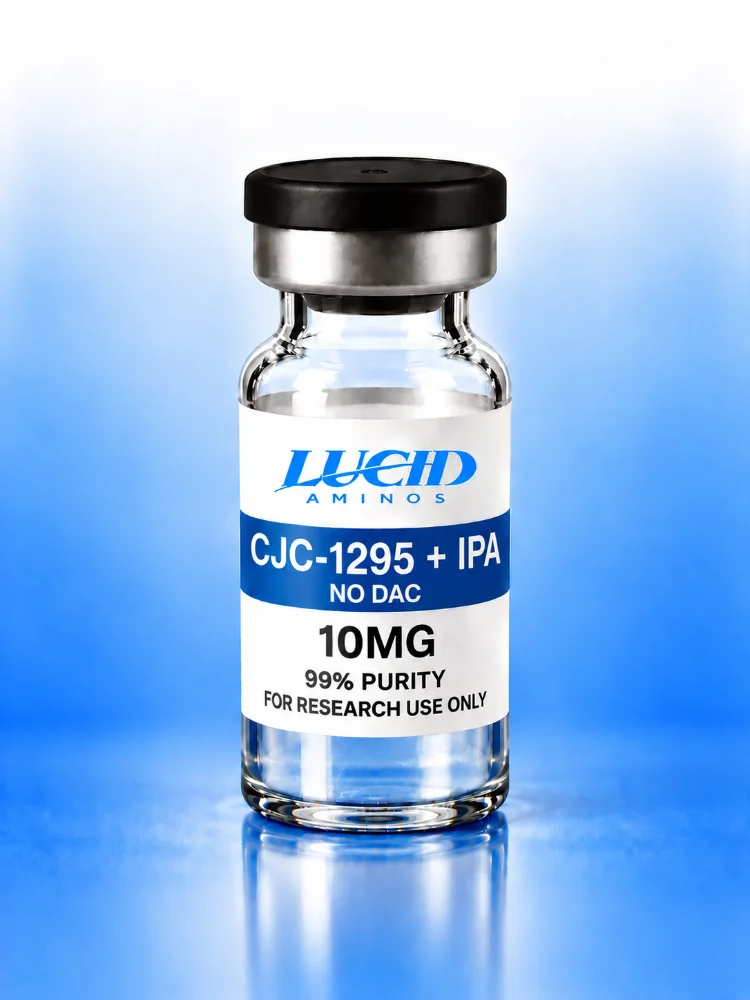
A synthetic peptide is built one amino acid at a time, and no chemical step is perfect. The few percent that go wrong at each stage do not vanish. They end up in the vial as closely related impurities with names like deletion peptides and truncated sequences. Knowing what they are makes lab reports much easier to read.

Key takeaways
- Deletion peptides are missing one amino acid because a coupling failed.
- Truncated peptides stopped growing early, often because the chain was capped.
- Insertion peptides contain an extra residue from double coupling.
- Mass spectrometry finds them by mass shifts that match amino acid residue masses.
- They often elute close to the main peak, so HPLC purity alone can hide them.
How they arise
In solid-phase synthesis, each cycle removes a protecting group and couples the next amino acid. If the coupling is incomplete, some chains miss that amino acid and then continue growing, producing a deletion. Chemists often add a capping step, which blocks unreacted chains with acetic anhydride so they cannot grow further, leaving a truncated, acetylated chain. Incomplete removal of protecting groups leaves tags on the finished peptide. And excess reagent can occasionally add a residue twice. The longer the chain, the more chances, as shown in our length and yield post.
Reading the mass shifts
- Deletion of glycine: minus 57.
- Deletion of alanine: minus 71.
- Deletion of phenylalanine: minus 147.
- Insertion of an extra residue: plus the residue mass.
- Acetyl cap on a truncated chain: plus 42.
- Oxidation of methionine or tryptophan: plus 16.
- Loss of water, as in aspartimide formation: minus 18.
- Deamidation: plus 1.
- Sodium adduct in the mass spectrometer: plus 22.
- A TFA counterion adduct: plus 114.
- Retained Fmoc or tBu group: plus 222 or plus 56.
Why HPLC alone can miss them
A peptide missing one residue has almost the same shape and polarity as the full one, so it may come off the column nearly at the same time and hide under the main peak. This is why identity and purity need separate tests, as in HPLC versus mass spectrometry. A different separation method, such as capillary electrophoresis, adds another view.
Why it matters
Related impurities can have different receptor activity, different stability and different immune properties, a point raised in our immunogenicity post. They also change the net peptide content, as discussed in our purity post.
What to look for in a report
- A mass spectrum matching the expected molecular weight.
- A chromatogram with the main peak well resolved from shoulders.
- A stated method, wavelength and gradient.
- Lot number and date matching your vial.
The bottom line
Impurities are normal in synthetic peptides, and the goal of analysis is to know what they are and how much is present. Read more about documentation in our lab report checklist and see our lab reports.
Related reading
- Length and synthesis yield
- HPLC versus mass spectrometry
- Why purity alone is not enough
- Browse the full Research Library
Explore Lucid Aminos
- Shop all research compounds
- Read the lab reports (COA)
- Monthly Research Panel
- Frequently asked questions
- Partner program
- About Lucid Aminos
- Contact us
For laboratory research use only. Not for human or veterinary use, and not intended to diagnose, treat, cure or prevent any condition. This article is educational and is not medical advice.