
Blog
The Hunt for CRF: Wylie Vale and Hundreds of Thousands of Sheep Hypothalami

In the 1950s, researchers proposed that the hypothalamus releases a chemical messenger that tells the pituitary gland to release ACTH. It was called corticotropin-releasing factor, or CRF. The idea was solid. The molecule, however, would not show itself for more than twenty years.
Why it was so hard
CRF exists in tiny amounts. A single sheep hypothalamus holds only a trace, and early purification attempts kept losing the activity along the way. Teams in several countries tried and failed. Roger Guillemin and Andrew Schally had already isolated other hypothalamic releasing hormones, which proved the concept, but CRF stayed elusive.
The breakthrough
At the Salk Institute, Wylie Vale and colleagues collected hypothalamic tissue on a huge scale, on the order of hundreds of thousands of sheep brains, and ran it through repeated rounds of chromatography. In 1981 they reported a 41-amino-acid peptide with amide at its C-terminus and the activity everyone had been chasing. Once the sequence was known, chemists could make it synthetically, and the work no longer depended on tissue.
A family resemblance
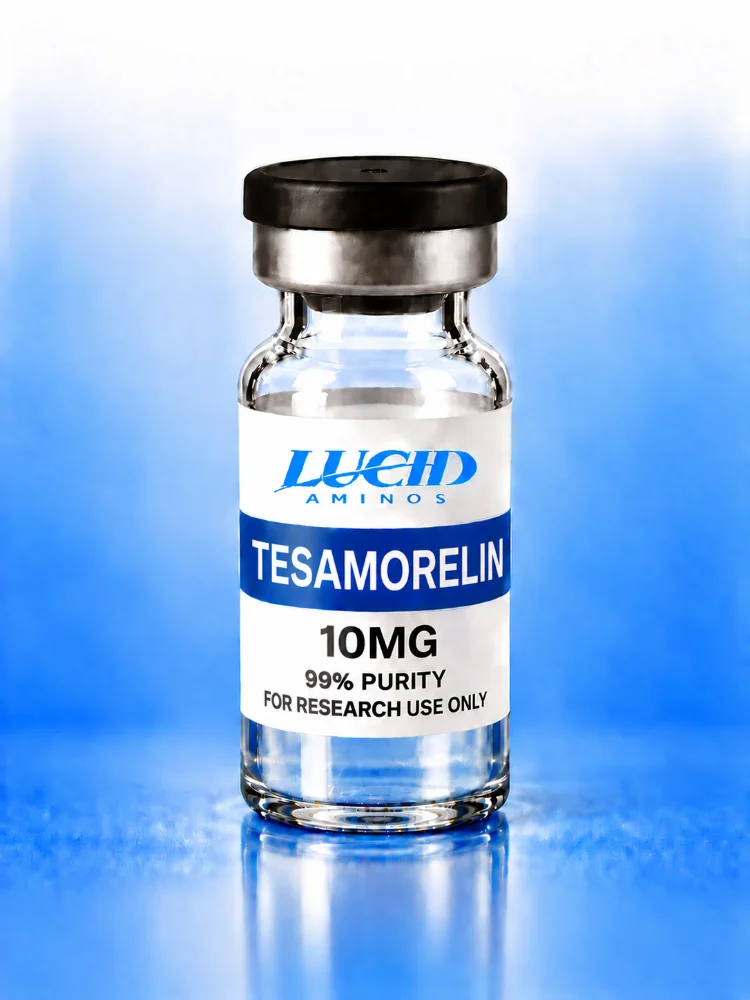
The same research era produced another releasing factor from the hypothalamic axis: growth hormone releasing hormone, isolated in 1982 and 44 residues long. Our catalog carries a modified version of that sequence as Tesamorelin 10mg. Seeing the two stories side by side shows how the field moved from tissue extraction to synthesis within a few years.
Take-home
- A hormone can be predicted for decades before anyone can hold it.
- Isolation needed an absurd amount of starting material.
- Synthesis ended that dependence and opened the door to modern peptide research.
Explore Lucid Aminos
- Shop all research compounds
- Read the lab reports (COA)
- Frequently asked questions
- Partner program
- About Lucid Aminos
- Contact us
For laboratory research use only. Not for human or veterinary use, and not intended to diagnose, treat, cure or prevent any condition. This article is educational and is not medical advice.